Articles

Moving beyond the Singularity: An analysis of emergent behavior in LLMs using complexity theory, Hofstadter’s Strange Loops, and the biological braid of evolution.

How do ships really know where they are? Drawing on Edwin Hutchins’ ethnographic research, this essay explores distributed cognition, complex adaptive systems, and why effective leadership is about sustaining collective sense-making rather than command and control.

A brief journey explaining the quest for purpose and meaning, stretching from teleology to teleonomy, from Plato to Camus.
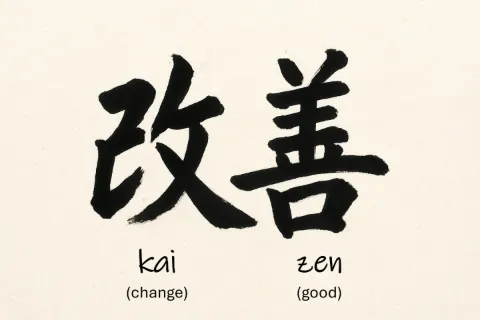
Kaizen was once a philosophy of collective learning within uncertainty. Over time it became a system of control. This essay explores how that transformation happened and what reclaiming Kaizen’s original spirit could mean for leadership and complexity today.

Leadership in complex and chaotic situations is discussed in the light of the leadership lesson Jacinda Ardern taught the world when she was Prime Minister of New Zealand in the aftermath of the racist attack on two mosques in Christchurch in 2019 that left 51 people dead.

As observed by the French Revolution, social cooperation can also break down when society's sense of justice is eroded. This is clarified by cooperation researchers Yuval Harari and Robert Axelrod.

In the 1989 UA 232 plane crash, the intervention of an expert pilot significantly reduced the loss of life. I am discussing the contrasting views of Kahneman and Klein on expert decision-making and their convergence, using this case as an example.

Evolutionary roots of risk aversion and risk-taking behaviors determined by the context described by Daniel Kahneman in his Prospect Theory.

Genetic algorithms are used in many fields today to solve problems with an evolutionary approach. This article mentions an approach to software bug fixing utilizing Genetic algorithms, as well as other uses in other fields.
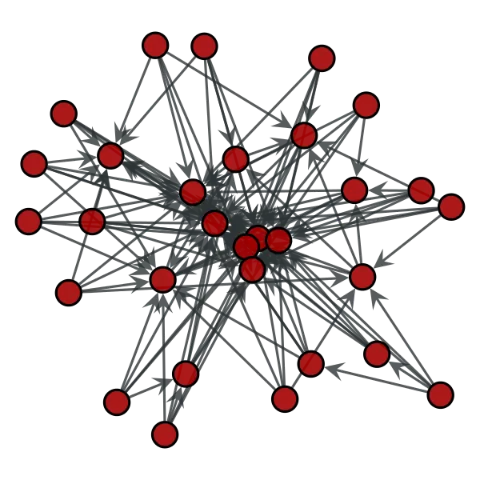
In this first part, I am explaining the Barabási-Albert model, which shows that in social, economic, biological, ecological, and electronic networks the elements which already have more connections are preferred.

The mesmerizing behavior of starling flocks and schools of fish depending on very few and simple rules, creating very complex flight and swim patterns sheds light for us to understand complexity
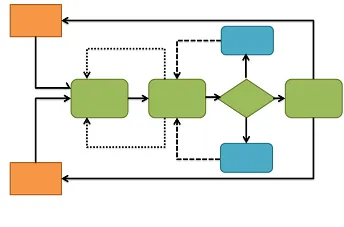
The term knowledge management is an oxymoron. Acquiring information by orders is futile at best. This article touches not-so-ideal approaches to manage organizational knowledge.
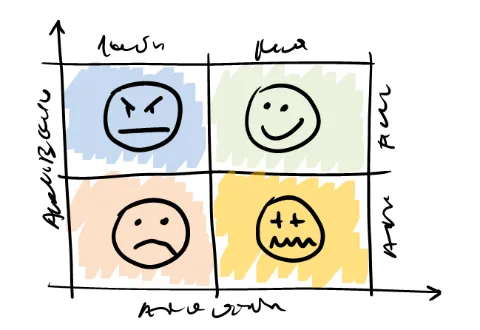
Do we use best practices out of place or in the right context? This article discusses that.